
 Free Injury Consultations
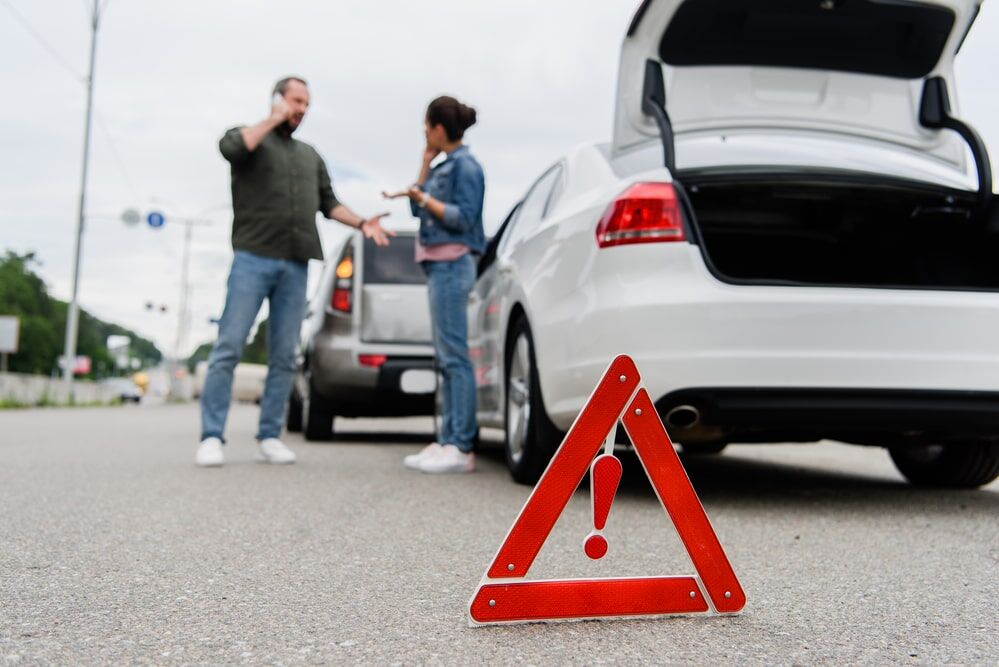
Rear-end collisions start with a gap that was too small. Texas has a statute that tells drivers how much room to leave behind another vehicle, and it uses flexible terms rather than a set count of feet. Understanding those terms helps an injured driver describe what went wrong.
What distance must a driver keep behind another vehicle?
Texas Transportation Code Section 545.062 says a driver following another vehicle must maintain an assured clear distance. The distance must be enough that the driver can safely stop without colliding with the vehicle ahead or veering into another vehicle, an object, or a person.
No count of feet or seconds appears in the statute. The test asks whether the driver could have stopped safely given the conditions at the time.
Why do speed and conditions change the distance?
Three factors set the required distance: how fast each vehicle is moving, how much traffic is present, and what shape the highway is in. A distance that is safe at low speed on a dry road may fall short at highway speed or in rain.
Someone injured in a rear-end crash can ask a Grapevine car accident lawyer how those conditions will be documented. Weather reports, photos of the road surface, and the speed of traffic all feed that account.
Does a separate rule cover trucks following trucks?
Yes. A separate provision applies to a truck operator who follows another truck outside a business or residential district. If conditions permit, that operator must leave enough space for a passing vehicle to enter it safely. The provision doesn’t prohibit passing.
A larger vehicle needs more room to stop, which makes the gap a central fact in a Grapevine truck accident claim. Measuring that space starts with photos of both trucks and the road.
What other situations does the statute address?
Operators driving in a caravan or motorcade outside business and residential districts must leave room for another vehicle to enter. The rule doesn’t apply to funeral processions.
A vehicle with a connected braking system, following another vehicle with the same system, may be assisted by it in keeping the required distance. Stored vehicle data may show braking events, so the car should be preserved after a crash.
What proof shows how closely a driver was following?
Four sources can show the gap before impact:
- A dash camera recording can capture the gap and how fast the other driver was moving.
- Tire marks and crush damage can show how little room was left between the vehicles.
- Witnesses can describe whether the vehicle behind was tailgating.
- Data stored in the car can show its speed and the moment the brakes were applied.
Video can capture details that memory loses, and dash cam footage can carry weight when fault is disputed. Older recordings can be overwritten by new ones, so footage should be backed up that day.
What if the other driver denies responsibility?
A driver who rear-ends another vehicle may still claim the lead driver stopped suddenly. Statements, photos, and video then carry the case.
Physical evidence supports one account over the other, and when drivers deny responsibility depends on which account that evidence fits. Photos of both vehicles should be taken before any repair begins.
Who else is at risk when a driver follows too closely?
The statute lists a person among the things a driver must avoid hitting when stopping or swerving. Following too closely leaves less time to react to someone stepping into the road.
A driver who brakes too late near a crosswalk may face a Grapevine pedestrian accident claim. Witnesses and nearby cameras help show how much room the driver left.
Do rideshare drivers follow the same rule?
The rule covers any driver following another vehicle, so a rideshare driver owes the same distance. A driver carrying a passenger follows the same statute as any other driver.
Trip records from the app can show the timing and route of the ride, which helps in a Grapevine rideshare accident claim. The driver’s insurer and the active app account should be identified early.
Which records tie a rear-end claim together?
Rhiannon Kelso earned a law degree from the University of Pittsburgh School of Law and speaks English and Spanish. Kelso founded Kelso Law, our firm, and has obtained $20+ million in recoveries for injured people.
Each record should speak to speed, traffic, or road conditions, which are the statute’s own terms. Early notes tie those records to one timeline.
A driver hurt after someone followed too closely can reach out to a Grapevine car accident lawyer about keeping the photos, video, and vehicle data. A written account from the day of the crash helps answer the first questions.
